The Question Most Guests Are Actually Asking
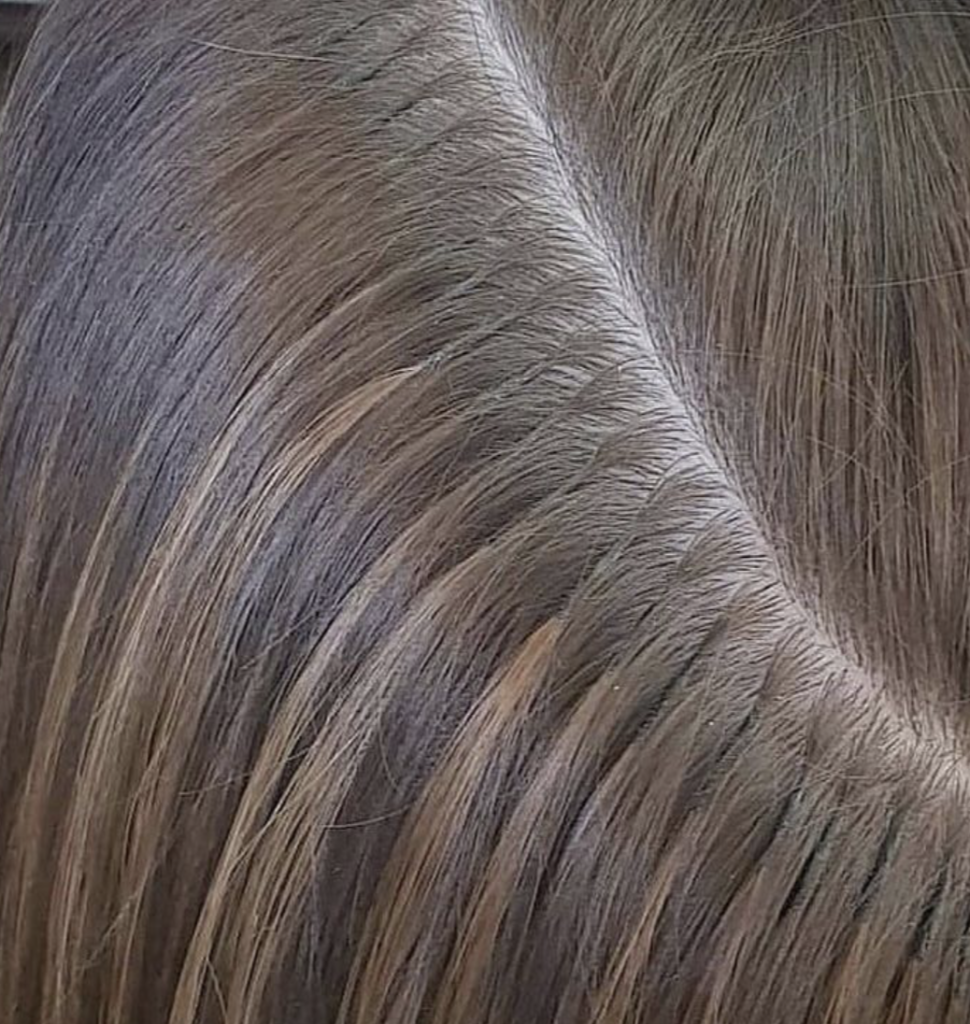
You’re not sure you want to cover your grey completely anymore. But you’re also not ready to go full silver. And you’re definitely not interested in the harsh line of demarcation that shows up every 6 weeks when your roots grow in. What you want is something in between, and you’re not sure that option even has a name.
It does. And at Menagerie Style House, it’s one of the most requested color conversations we have at both our Raleigh and Wendell locations. Grey blending is a broad term that covers several distinct approaches, and which one is right for you depends on how much grey you have, where it’s concentrated, and what your honest maintenance threshold looks like. This guide breaks down every option so you can walk into your consultation knowing exactly what questions to ask.
What Is Grey Blending, Exactly?
Grey blending is a category of color techniques designed to make grey hair less visible by softening the contrast between your grey and your natural pigmented hair. Rather than covering grey completely with a single flat color, grey blending works with your grey, whether that means diluting it, framing it, or letting it lead while adding dimension around it.
The specific technique your stylist recommends depends on your grey percentage, your hair texture, and how much time you want to spend in the salon chair. There’s no single correct answer. There are 3 main approaches, and each one suits a different situation.
Option 1: Full Grey Coverage
Full grey coverage uses permanent color to deposit pigment over every grey strand, returning your hair to a consistent base color. This approach gives you the most complete, uniform result and works well if you want to look like your grey never happened.
The trade-off is maintenance. Permanent color on grey hair typically requires a touch-up every 4 to 6 weeks because grey roots grow in with a sharp contrast against the colored lengths. If your grey is concentrated at the hairline and temples, that contrast becomes visible quickly. For guests with a busy schedule or a strong preference for low-maintenance color, full coverage can become a commitment that starts to feel like a chore rather than a choice.
Who Full Coverage Works Best For
- Guests who are early in their grey journey and have less than 30% grey overall
- Anyone who strongly prefers a uniform, consistent hair color
- Guests who are comfortable returning to the salon every 4 to 6 weeks
- Those who want the most dramatic reversal of visible grey
At Menagerie, full grey coverage is always custom-formulated. We don’t reach for a one-size-fits-all box-color equivalent. Your formula is built around your existing undertones, your skin tone, and your lifestyle. The goal is color that looks natural, not painted on.
Option 2: Partial Grey Blending with Highlights or Lowlights
This is the approach our stylists recommend most often for guests who want the most flexibility with the least maintenance. Rather than covering every grey strand, partial blending uses highlights, lowlights, or a combination of both to blur the visual line between your grey and your natural color. The grey doesn’t disappear. It gets absorbed into a dimensional pattern that makes the whole thing look intentional.
Think of it as camouflage rather than coverage. Your grey becomes part of a multi-tonal result rather than the outlier you’re trying to hide. When your roots grow in, they grow in softly because the color transition is gradual, not stark.
Techniques That Fall into This Category
- Balayage with grey blending: Hand-painted highlights that work around your natural grey pattern, so both read as intentional dimension. This is especially effective if your grey is scattered throughout rather than concentrated at the roots.
- Foil highlights with softened placement: Strategic foils placed to frame the face and disrupt the visible root line. This is a slightly more structured approach than balayage and gives you more control over where brightness lands.
- Glossing over partially blended color: A toner or gloss applied over blended hair adds translucency and richness without flattening the dimension your grey creates. It also helps grey strands, which can sometimes look wiry or dull on their own, look polished and intentional.
According to our stylists at both locations, partial blending is the sweet spot for guests with 30% to 60% grey who want a result that grows out gracefully and doesn’t demand a rigid touch-up schedule. Many guests move from full coverage to partial blending specifically because they want to extend the time between salon visits without sacrificing how polished their color looks.
What the Timeline Looks Like
With a well-executed blending approach, many guests come in every 10 to 14 weeks instead of every 4 to 6. That’s a meaningful difference. For guests who travel frequently, have unpredictable schedules, or simply want to stop planning their life around root touch-ups, partial blending is often the decision that finally makes color feel sustainable again.
Option 3: Transitioning to Natural Grey with a Salon Strategy
Going grey on purpose looks completely different from going grey by accident. The difference is intentionality, and that’s exactly what a well-planned transition strategy at a grey blending salon provides.
If you’ve decided you want to let your natural grey grow in, the challenge is that the process takes time, and the intermediate stage can be awkward without a thoughtful color plan. The demarcation line between your previously colored ends and your natural grey roots is the main obstacle. The goal of a planned transition is to minimize that line so the grow-out is graceful rather than jarring.
How We Approach Grey Transitions at Menagerie
There’s no single formula, because every guest’s grey pattern is different. But the general strategy looks something like this:
- If your grey is mostly at the root: We use highlights or a lightening technique on the mid-lengths and ends to bring them closer in tone to your incoming grey. This narrows the contrast gap and makes the grow-out less visible over time.
- If your grey is scattered: We use a gloss or toner to cool down and desaturate the previously colored sections so they sit closer in tone to your grey, creating a more cohesive look as the natural color grows in.
- If you have significant color buildup on the ends: We may recommend a multi-session approach that gradually removes or fades the old color over 2 to 3 visits rather than trying to correct it all at once. Patience here protects your hair’s integrity.
One thing we’re honest about: transitioning to grey is not a one-appointment process. Guests who expect to walk in colored and walk out fully transitioned in a single visit are usually disappointed. Doing it well takes 3 to 6 months for most hair types, sometimes longer. What it should never take is a compromising cut to get rid of the old color, unless that’s what you want.
How to Know Which Option Is Right for You
The short answer: your consultation will tell you. But here are the questions our colorists ask every guest who comes in asking about grey blending in Raleigh or Wendell. You can use these to start clarifying your own priorities before you arrive.
- What is your grey percentage, and where is it concentrated? Grey at the hairline and crown grows in noticeably faster than grey scattered through the lengths. Concentrated root grey usually requires more frequent touch-ups with full coverage, which is one reason partial blending is often a better long-term fit.
- How often are you realistically willing to come in? There’s no judgment either way. But being honest about this upfront saves you from choosing a maintenance level you’ll resent in 3 months.
- Do you want to keep some warmth, or are you drawn to a cooler result? Grey hair naturally pulls cool, so blending approaches that add warm highlights often create a surprising softness around the face that guests love. Cooler results read more modern and graphic.
- Is your goal to look like you don’t have grey, or to look like someone who has great grey? That’s a real distinction, and it shapes everything about your color plan.
Grey Hair Color Formulation: What Makes It Different
Grey hair behaves differently than pigmented hair. It’s often coarser in texture, more resistant to color absorption, and can have a tendency to look yellow or brassy if the wrong toner is used. Grey hair also tends to be more porous at the ends and more resistant at the root, which means the same formula can process unevenly if your stylist isn’t calibrating for your specific hair structure.
This is why our colorists assess your hair’s texture and porosity before recommending a formula. The goal isn’t just to land on the right color. It’s to land on a formula that processes evenly, lasts reliably, and keeps your hair in good condition over time. Aveda color, which we use at both our Raleigh and Wendell locations, is formulated to be gentle on grey-resistant hair while still delivering full, lasting coverage when that’s the goal.
Grey Blending at Menagerie Style House: What to Expect
Both our Raleigh and Wendell locations see a high volume of grey blending consultations, and our colorists have developed a straightforward process to make sure your first visit sets you up for long-term success, not just a great day-of result.
Your Consultation
All new color guests, including those coming in specifically for grey blending, start with a consultation. This is where we look at your natural grey pattern, assess your hair’s current condition, talk through your lifestyle and maintenance preferences, and land on a strategy that makes sense for your actual life. If you’d like to start the conversation before you come in, you can fill out our online consultation form to give your stylist a head start.
The Color Process
Depending on which approach you’re using, your first grey blending session typically runs 2 to 4 hours. A partial blending appointment with highlights and a gloss will take longer than a full coverage touch-up, and a grey transition that requires significant lightening may require a longer reservation. We build the time into your booking so there’s no rushing.
Aftercare and Maintenance
Before you leave, your stylist will walk you through the exact maintenance routine your color needs, including which shampoo to use (a purple or blue-toned shampoo is often recommended for grey-adjacent color to keep things from going yellow), how often to come back in, and what to expect as your color grows out between visits.
If you’re curious about whether a keratin treatment might help with grey hair texture, that’s worth bringing up during your consultation. Grey hair’s natural coarseness responds well to smoothing treatments in a lot of cases, and combining services strategically can make your overall hair experience feel much more manageable.
A Note on Lived-In Color and Grey
One approach that has become consistently popular among our guests navigating grey is lived-in color. The same philosophy that makes lived-in color so appealing for pigmented hair, soft, dimensional, grows out without a harsh line, applies directly to grey blending. When your color is designed to look like it evolved naturally rather than being placed precisely, grey growth becomes part of the story rather than a problem to solve.
Our stylists who specialize in lived-in techniques apply the same logic to grey blending consultations. If you’ve been drawn to the softer, more effortless color aesthetic you’ve been seeing, that preference translates well into a grey blending strategy.
Ready to Talk Through Your Grey Blending Options?
You don’t have to figure this out on your own. The whole point of a consultation is to take your specific grey pattern, your lifestyle, and your color goals and build a plan that actually makes sense for all three. Our colorists at both our Raleigh and Wendell locations work with grey hair every day. They know which approaches hold up over time and which ones look great once and then become a maintenance headache.
If you’re ready to stop guessing, reserve your color consultation and let’s figure out the right approach for your hair. This is exactly the conversation our colorists love having.