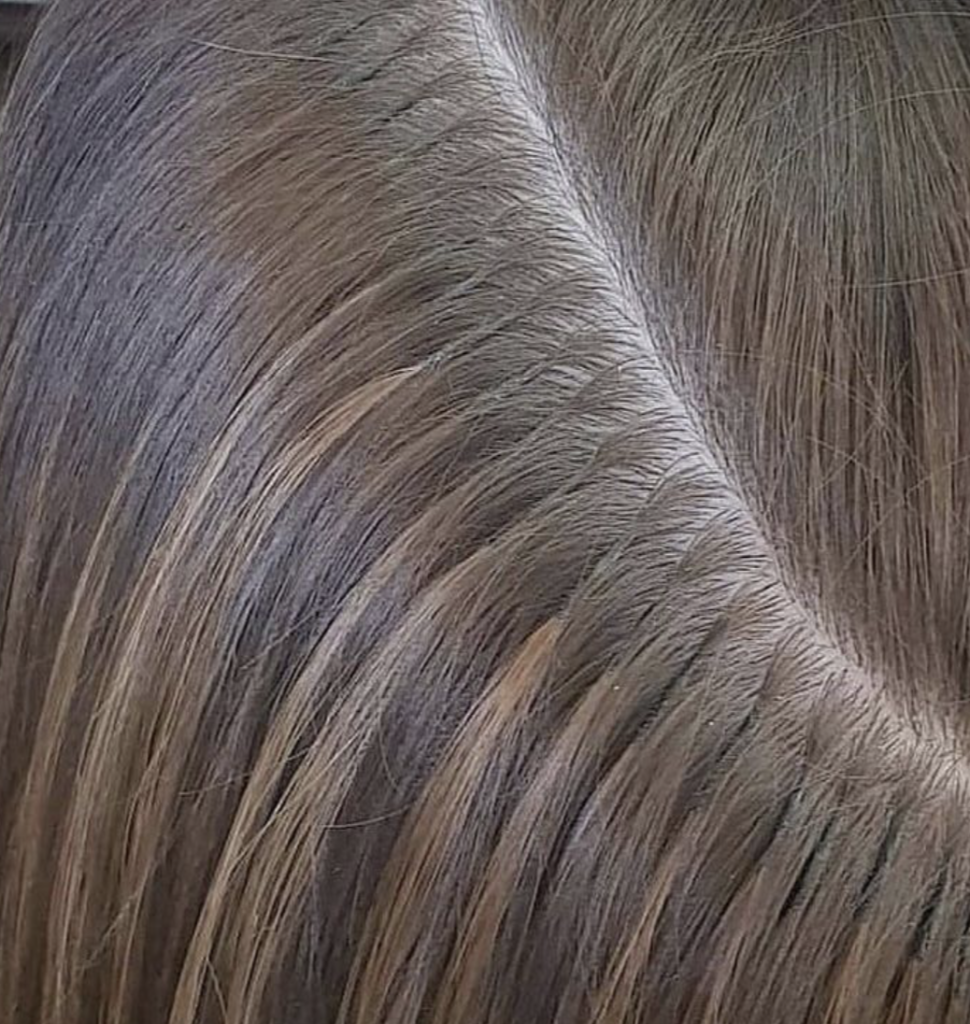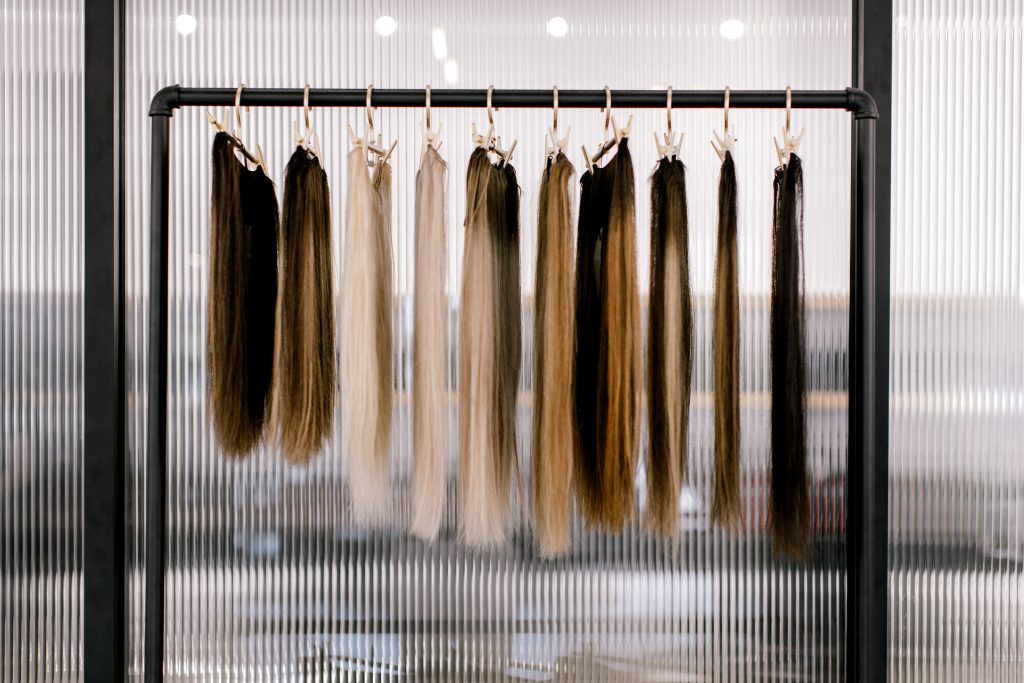
The choice between hand-tied weft and K-tip extensions comes down to how much hair you’re adding and where you need it. Hand-tied wefts work best when you want overall volume and length throughout your head--they cover more area efficiently with fewer attachment points. K-tip extensions excel at targeted placement, adding dimension to specific sections or seamlessly blending with shorter layers without the bulk of a full weft.
Both methods offer natural-looking results and long-term wear, but they achieve it differently. Let’s break down exactly how each works, who they’re best for, and what your daily life with them actually looks like.
How Do Hand-Tied Weft Extensions Work?
Hand-tied weft extensions are thin, flexible rows of hair sewn together by hand, creating a base about the width of a shoelace. We attach these wefts to your natural hair using small, silicone-lined beads that are clamped flat against your scalp. The wefts sit in horizontal rows, typically 3-5 rows depending on how much coverage you need.
The installation process takes 2-4 hours for your first appointment. We section your hair horizontally, create a small “track” of beads along each section, then sew the weft directly onto those beads using a special needle and thread. The result lies completely flat--no bumps, no bulk, virtually undetectable even when you pull your hair up.
Because the wefts are hand-sewn rather than machine-made, they’re incredibly thin and flexible. They move naturally with your hair, which means you can style normally--curling irons, flat irons, updos, ponytails--without worrying about visible tracks or uncomfortable pulling. The flexibility also reduces tension on your natural hair, making them gentler than thicker, machine-sewn wefts.
Hand-tied wefts require move-up appointments every 6-8 weeks. As your natural hair grows, the beads and wefts move down away from your scalp. During your move-up, we remove the thread, slide the beads back up to your roots, and re-sew the same wefts. The extensions themselves last 9-12 months before the hair quality degrades and needs replacement. This longevity makes them cost-effective despite the higher initial investment.
How Do K-Tip Extensions Work?
K-tip extensions (also called keratin-tip or fusion extensions) are individual strands of hair with a small keratin bond at the top, shaped like the letter “K.” We attach each strand to small sections of your natural hair using a heat tool that melts the keratin, fusing it around your hair to create a secure bond.
The installation is meticulous and time-intensive--expect 3-5 hours depending on how many strands you’re adding. We typically install 100-200 individual bonds for a full head, though you can do fewer for targeted volume or highlights. Each bond is about the size of a grain of rice, making them extremely discreet when placed correctly.
The precision of K-tips allows for incredibly customized placement. We can add them exactly where you need volume, create seamless layers, or blend extensions into shorter sections of hair that wouldn’t support a full weft. This makes K-tips ideal for adding dimension rather than overall fullness--think face-framing pieces, crown volume, or blending grown-out layers.
K-tip extensions also require maintenance every 8-12 weeks, though the timeline is slightly more flexible than hand-tied wefts. During move-ups, we use a solution to break down the keratin bond, remove each extension, then reinstall it higher on your hair with fresh keratin. The hair itself can last 6-9 months with proper care before needing replacement. Individual bonds may shed or loosen over time, which is normal--we’ll replace any problematic ones during your maintenance appointments.
Which Method Works Better for Your Hair Type?
Fine to medium hair texture: Both methods can work beautifully, but hand-tied wefts often feel more comfortable. The distributed weight across a weft puts less stress on individual hair strands than multiple K-tip bonds concentrated in one area. If your hair is fine but you have good density, hand-tied gives you maximum impact with minimal attachment points.
K-tips work well for fine hair when you’re adding strategic volume rather than full coverage. If you just want to fill in around your face or add dimension to specific sections, the individual placement of K-tips won’t overwhelm fine hair the way full wefts might.
Thick, coarse hair texture: Hand-tied wefts integrate seamlessly because your natural hair has the density to conceal the rows easily. You can typically handle more wefts and heavier hair without discomfort. The efficiency of wefts also means shorter installation time despite adding significant volume.
K-tips also work well with thick hair, though installation takes longer because we’re placing individual bonds. The benefit is precision--we can weave K-tips throughout your natural thickness to add length without creating a shelf or visible line of demarcation.
Layered haircuts: K-tips excel here. We can place individual strands at varying lengths to blend perfectly with your layers, creating seamless transitions. Hand-tied wefts can work with layers, but they require more strategic cutting and blending after installation to avoid blunt lines.
Shorter starting length: You need at least 4-5 inches of hair for hand-tied wefts to have enough length to braid and secure the beads properly. K-tips can be installed on slightly shorter hair (3-4 inches minimum) because we’re bonding to smaller sections. If you’re growing out a shorter cut, K-tips might be your only option initially.
What’s the Lifestyle Difference Between Hand-Tied and K-Tip Extensions?
Daily styling time: Hand-tied wefts are faster to manage. You’re brushing through fewer attachment points, and the wefts move as one unit. K-tips require more careful brushing because you need to work around each individual bond to prevent tangling at the attachment point.
Workout and active lifestyle: Both methods are secure enough for regular exercise, but hand-tied wefts feel more stable during high-impact activities. The sewn attachment distributes movement across the entire weft rather than pulling on individual bonds. If you’re doing hot yoga, CrossFit, or swimming regularly, hand-tied tends to hold up better with less maintenance between appointments.
Sleeping comfort: Hand-tied wefts lie flatter against your head, which most guests find more comfortable initially. K-tip bonds can feel slightly bumpy for the first week until you adjust. Both require sleeping with hair in a loose braid or ponytail to prevent tangling, but hand-tied wefts are generally less noticeable against your pillow.
Styling versatility: Hand-tied wefts give you complete freedom--updos, ponytails, braids--because the rows are so thin and lie so flat. K-tips are also versatile, but you need to be more strategic about placement if you frequently wear your hair up. We’ll position bonds to avoid visible spots in your typical hairstyles.
Travel-friendliness: Hand-tied wefts are easier to maintain while traveling. Quick brushing and simple styling work well. K-tips require more attention to each bond during brushing and washing, which can be challenging in hotel bathrooms or on-the-go situations.
How Do Costs Compare Between Hand-Tied and K-Tip Extensions?
Hand-tied weft extensions typically have a higher initial installation cost because you’re purchasing full wefts of hair, but the maintenance costs are lower and more predictable. Move-up appointments every 6-8 weeks involve labor (removing and re-sewing) but not new materials until you replace the wefts at 9-12 months.
K-tip extensions often have a lower initial cost per strand, but you’re purchasing 100-200+ individual pieces. The installation labor is more expensive because it’s more time-intensive. Maintenance appointments cost similarly to hand-tied move-ups, but you may need to replace individual bonds that shed or loosen between appointments, adding incremental costs.
Over a year, the total investment is often comparable between methods when you factor in installation, maintenance, and replacement. The real difference is in the payment structure--hand-tied has higher upfront costs with predictable maintenance, while K-tips spread costs more evenly but with potential for unexpected bond replacements.
During your consultation, we’ll provide specific pricing based on how much hair you need, your desired length, and the quality of extensions you choose. We’ll also break down the annual cost so you understand the full financial commitment, not just the initial installation.
What Does Maintenance Look Like for Each Method?
Hand-tied weft maintenance: Brush twice daily with a soft-bristle extension brush, starting at the ends and working up. Never brush from roots down. Wash 2-3 times per week with sulfate-free shampoo, applying product to your scalp and letting it rinse through the lengths. Condition from mid-length to ends, avoiding the beaded attachment points. Sleep with hair in a loose braid. Attend move-up appointments every 6-8 weeks without exception--waiting longer causes matting and tangling that’s difficult to reverse.
K-tip maintenance: Brush 2-3 times daily, carefully working around each bond. Hold hair above the bond while brushing below it to prevent pulling on the attachment point. Wash 2-3 times per week, being gentle around the keratin bonds--rough handling can loosen them prematurely. Use a wide-tooth comb to detangle when wet, never a brush. Avoid oil-based products near the bonds as they break down keratin. Sleep with hair braided or in a low ponytail. Schedule move-ups every 8-12 weeks, and contact us immediately if bonds start slipping or feeling loose.
Product requirements for both: Sulfate-free, paraben-free shampoo and conditioner. Lightweight leave-in conditioner or detangling spray. Heat protectant for styling. Extension-safe dry shampoo for between washes. Avoid heavy oils, silicones near attachment points, and anything with high alcohol content.
Key Takeaways: Choosing Between Hand-Tied and K-Tip Extensions
Choose hand-tied weft extensions if you want overall volume and length, prefer lower daily maintenance, and value styling versatility. They’re efficient, cost-effective long-term, and work beautifully for most hair types and lifestyles.
Choose K-tip extensions if you need targeted placement, have a layered cut that requires seamless blending, or want to add dimension to specific areas without full coverage. They offer unmatched customization but require more daily attention and careful maintenance.
The right choice isn’t about which method is “better”--it’s about which method aligns with your hair’s needs, your styling habits, and your commitment to maintenance. Both deliver beautiful, natural-looking results when installed correctly and cared for properly.
Ready to determine which extension method is right for you? Reserve your consultation at Menagerie Style House in Raleigh or Wendell. We’ll assess your hair type, discuss your goals and lifestyle, and create a personalized extension plan that sets you up for success. Connect with our Concierge to start your extension journey with confidence.