

Balayage Pros and Cons
Is It Right for You?
Understanding Balayage Before You Book
You've seen it everywhere. Those effortlessly sun-kissed highlights that somehow look both intentional and natural at the same time. Balayage has become one of the most requested color services in salons, and there's good reason for its popularity. But like any hair color technique, it's not universally perfect for everyone.
Let me walk you through what balayage actually involves, who benefits most from this technique, and the honest considerations you should think about before your reservation. After 16 years behind the chair, I've learned that the best color results come from matching the right technique to the right person. Balayage is incredible for many guests, but understanding both its advantages and limitations helps you make the choice that works for your hair, your lifestyle, and your expectations.
What Makes Balayage Different
Balayage is a freehand painting technique where color is applied to the surface of the hair rather than using foils. The word comes from the French term meaning "to sweep" or "to paint," which describes exactly how we apply the color.
Instead of saturating entire sections from root to tip, we strategically place lighter tones where the sun would naturally lighten your hair.
This technique creates what we call dimensional color. You get varying depths and tones throughout your hair rather than uniform highlights. The placement is customized to your specific hair, face shape, and the look you want to achieve.
No two balayage applications look exactly the same because we're working with your hair's natural fall and movement.
Traditional foil highlights follow a more systematic pattern, with color placed at regular intervals throughout the head. Balayage focuses on surface dimension, which is why it creates that lived-in, naturally sun-lightened effect.
The grow-out tends to be softer and more gradual, which is one of the technique's biggest draws for guests with busy schedules.
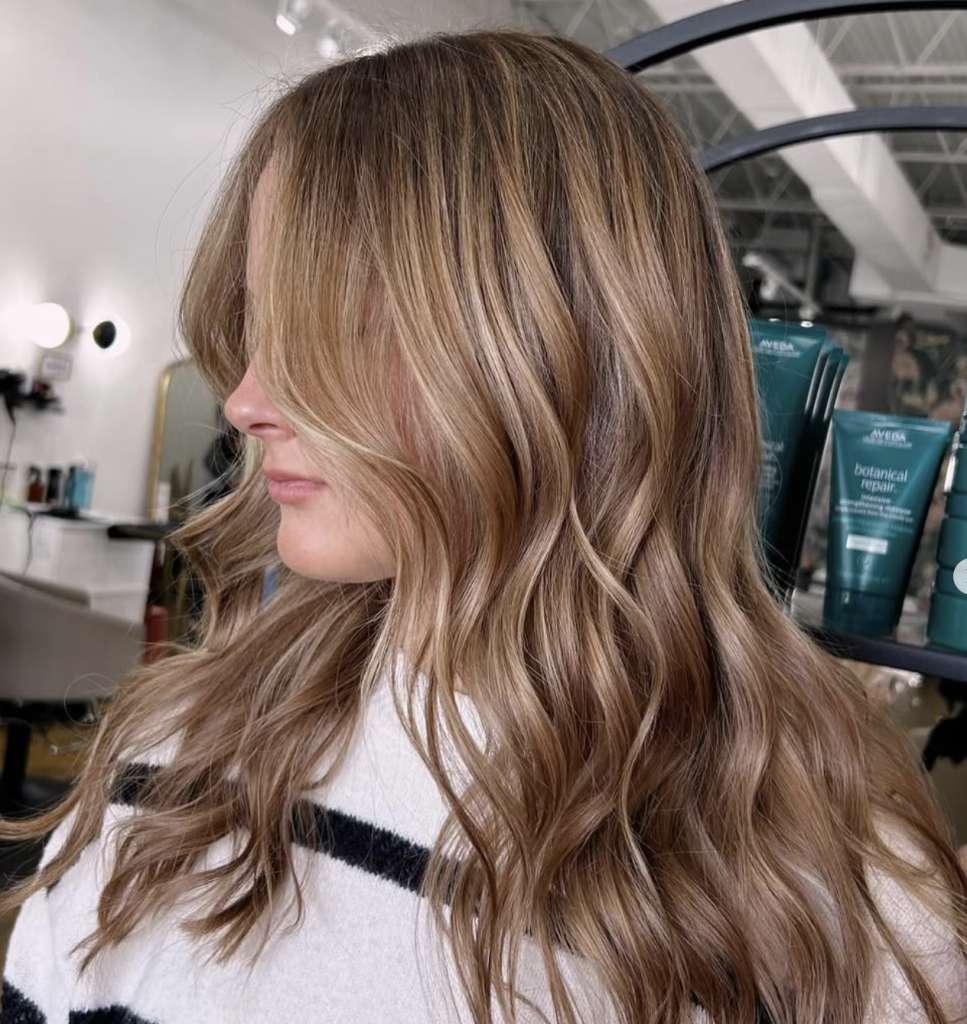
Color pictured by Lauryn, Associate stylist
The Real Advantages of Balayage
Natural-Looking Dimension
The freehand application creates highlights that blend seamlessly with your base color. Rather than seeing distinct lines of demarcation, you get a gradual transition that mimics how hair naturally lightens over time. This dimensional quality adds depth and movement that catches light in a way that feels organic rather than obviously colored.
Lower Maintenance Requirements
Here's what actually matters for most guests: balayage typically requires fewer touch-up reservations than traditional highlights. Because the color doesn't start at your roots and the placement follows your hair's natural patterns, you can usually go 12-16 weeks between services. Some guests even stretch it to 5-6 months depending on their desired look and hair growth patterns.
This doesn't mean balayage is no-maintenance. You'll still need professional care to keep the color fresh and healthy. But if you're someone who struggles to make regular salon reservations or prefers a more relaxed approach to color upkeep, this technique offers more flexibility than root-to-end highlighting.
Customizable to Your Features
Every balayage service should be customized to complement your face shape, skin tone, and personal style. We can concentrate lighter pieces around your face to brighten your complexion, add dimension through your lengths for movement, or create a more subtle or dramatic effect depending on what you're after.
This customization extends to color choices too. Balayage works with warm golden tones, cool ashy hues, rich coppers, or any shade that complements your natural coloring. The technique is versatile enough to create everything from barely-there dimension to significant contrast.
Works With Various Hair Textures
One of balayage's strengths is its adaptability to different hair textures. Whether you have straight, wavy, curly, or coily hair, the freehand technique can be adjusted to work with your texture's natural movement. The color placement enhances your hair's existing pattern rather than fighting against it.
Less Damage Than Some Techniques
Because balayage focuses on surface painting rather than saturating every section, you're typically applying less lightener overall compared to full-head foil highlights. This can mean less stress on your hair, especially if you're working with a skilled colorist who understands how to preserve hair integrity while achieving your desired results.
That said, any lightening process involves some level of damage. Balayage isn't damage-free, but when executed properly with quality products and proper aftercare, it can be gentler than more aggressive highlighting techniques.
The Honest Limitations to Consider
Initial Time Investment
Your first balayage reservation typically takes 2-4 hours depending on your hair length, density, and starting color. If you're going significantly lighter than your natural base or correcting previous color, it might require multiple sessions to achieve your goal safely. This time commitment surprises guests who expect a quick process.
Cost Considerations
Quality balayage is an investment. The technique requires skill and experience to execute well, and you're paying for that expertise. While you might save on maintenance frequency, the initial service and subsequent appointments still represent a significant financial commitment.
At our salon, balayage falls within our dimensional color packages, with pricing varying by stylist level and the complexity of your color goals. It's worth understanding the full cost picture before committing to the service.
Not Always Lighter Than Expected
This is where communication during consultation becomes crucial. Some guests imagine balayage will significantly lighten their overall hair color. In reality, well-executed balayage creates dimension and brightness without making your entire head dramatically lighter. If you want an overall lighter base, you might need additional services beyond balayage alone.
Requires Professional Expertise
Balayage looks deceptively simple, but executing it well requires significant training and experience. A poorly done balayage can look splotchy, brassy, or create unflattering contrast. This isn't a technique you should trust to just anyone or attempt at home. The results are only as good as the colorist performing the service.
Color Maintenance Still Matters
While balayage requires less frequent touch-ups, it's not maintenance-free. Lightened hair needs specific care to stay healthy and vibrant. You'll need quality color-safe products, regular conditioning treatments, and attention to heat styling practices. Blonde tones can turn brassy without proper toning, and all lightened hair is more vulnerable to damage.
May Not Suit Every Hair Goal
If you want consistent, all-over color coverage or prefer a more uniform highlighted look, balayage might not be your best choice. The technique intentionally creates variation, which is perfect for dimensional, lived-in color but not ideal for everyone's aesthetic preferences.
Which Hair Types Work Best
alayage adapts to various hair types, but certain characteristics make for easier application and more noticeable results.
Wavy and curly hair showcases balayage beautifully because the natural texture creates movement that highlights the dimensional color placement. The varying curl patterns catch light differently, making the color feel especially dynamic.
Medium to thick density hair provides enough canvas for creating noticeable dimension. With very fine or thin hair, heavy highlighting can sometimes look disconnected from the base color or create transparency issues.
Shoulder-length or longer hair gives more space for the gradual color transition that makes balayage special. Very short hair can still be balayaged, but you have less length to work with for that seamless blend.
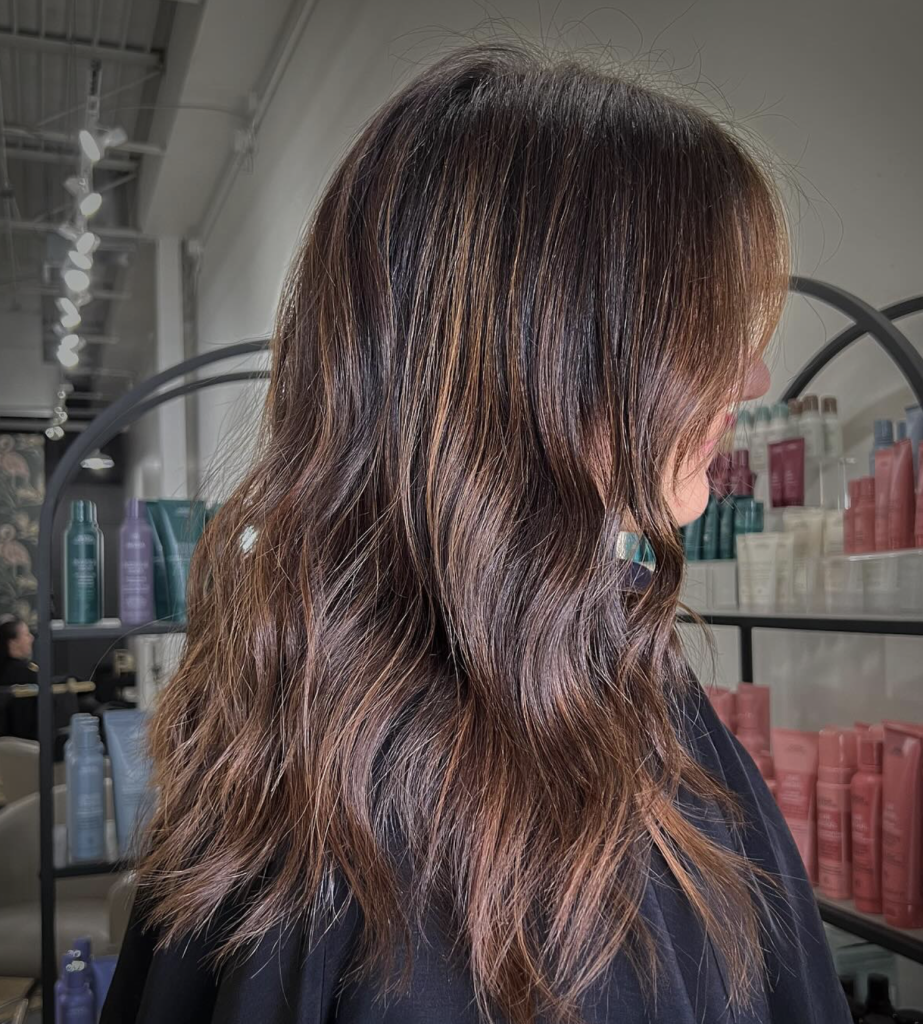
Natural brunettes often see particularly stunning results because the contrast between their base and the lightened pieces creates rich dimension. However, balayage works for any natural hair color when customized appropriately.
Color pictured by Lorna, Level 3 stylist, Raleigh
Hair Conditions That Require Extra Consideration
If your hair is already significantly damaged, over-processed, or chemically treated, balayage might not be the best immediate choice. Lightening puts additional stress on hair, and starting with compromised hair can lead to breakage, dryness, or color that doesn't process as expected.
In these situations, we typically recommend focusing on hair health first. That might mean several weeks or months of conditioning treatments, protective services, and allowing previous chemical processes to grow out before attempting balayage.
If you've recently had any chemical straightening, relaxing, or permanent wave services, you'll need to wait before adding lightening services. The combination of chemical processes increases damage risk significantly.
Very dark previously colored hair presents another consideration. If you've been coloring your hair darker for years, achieving the lighter tones needed for balayage might require additional steps like color removal or multiple gradual lightening sessions. This isn't impossible, but it requires patience and realistic expectations.
What Professional Application Involves
A thorough consultation starts every balayage service. This is where we discuss your goals, assess your hair's current condition and history, and create a realistic plan for achieving your desired look. We talk about maintenance expectations, pricing, and whether your vision aligns with what balayage can actually deliver for your specific hair.
The application process itself involves sectioning your hair strategically and hand-painting lightener onto selected pieces. We vary the placement, saturation, and technique based on where you need dimension. Some areas might get more concentrated color, others might receive just a subtle touch.
Processing time varies based on your natural color, desired result, and hair condition. Once the lightener has lifted your hair to the right level, we rinse, cleanse, and usually apply a toner or gloss. This step is crucial for achieving the final color you want and ensuring the highlights blend beautifully with your base.
Most balayage services include a haircut or styling to finish. This completes the transformation and ensures your color looks its absolute best with your hair's shape and movement.
Maintaining Your Balayage Between Reservations
Quality home care makes a significant difference in how long your balayage stays vibrant and healthy. Start with sulfate-free shampoo and conditioner formulated for color-treated hair. These products clean without stripping your color as quickly as regular shampoos.
Purple or blue-toning shampoos help maintain blonde or ash-toned balayage by counteracting the warm tones that naturally develop in lightened hair. Use these once or twice weekly rather than every wash.
Regular conditioning treatments restore moisture that lightening removes. Whether it's a weekly deep conditioning mask or professional treatments between color services, this step prevents dryness and maintains hair health.
Heat protection is non-negotiable for lightened hair. Apply heat protectant before using any hot tools, and when possible, let your hair air-dry or use lower heat settings.
Your balayage will naturally warm over time as the toner fades. Schedule gloss or toner refresh services between your full balayage appointments to keep your color looking fresh. These quick services make a noticeable difference without the time or cost of full color application.
Making the Right Choice for Your Lifestyle
Think honestly about your daily routine. If you wash your hair daily, use hot tools regularly, and don't want to invest in specialized color care products, balayage might require more maintenance than you're comfortable providing.
Consider your schedule flexibility. While balayage requires less frequent touch-ups than some color techniques, those appointments still take several hours. If finding that time is challenging, make sure you're comfortable with the commitment before starting.
Budget matters too. Calculate not just the service cost but also the investment in proper home care products and maintenance services. Quality color requires quality care.
Your personal style plays a role as well. If you prefer a polished, uniform look or enjoy the ritual of regular salon reservations, traditional highlights might suit you better than balayage's more relaxed, lived-in aesthetic.
Questions to Ask During Your Consultation
When you meet with our stylist to discuss balayage, come prepared with specific questions about your individual situation. Ask to see examples of their balayage work, particularly on hair similar to yours in texture, length, and starting color.
Discuss the realistic timeline for achieving your color goals. If you're starting with very dark hair and want light blonde balayage, understand that this might require multiple sessions and ongoing maintenance.
Get clear pricing information upfront, including what's included in the service and what might cost extra. Understand the recommended maintenance schedule and typical costs for keeping your color looking its best.
Talk about your lifestyle and hair care habits. A good colorist will help you determine whether balayage aligns with your daily routine and maintenance preferences.
Working With Your Natural Color
Balayage should enhance your natural beauty rather than fight against it. The most successful results typically work with your natural base color rather than requiring dramatic changes.
If you're naturally dark-haired, rich caramel, honey, or copper tones often create beautiful dimension while feeling natural. Extremely light blonde balayage on very dark natural hair requires more upkeep and can be harder to maintain.
Natural blondes can add lighter pieces for brightness and dimension without going significantly lighter overall. This creates movement and interest while keeping maintenance manageable.
Natural redheads have unique considerations because red tones can pull through during lightening. Working with a colorist experienced in red hair helps achieve beautiful balayage while managing those warm undertones effectively.
Is Balayage Right for You?
After looking at the advantages and limitations honestly, you're in a better position to decide whether balayage matches your needs. This technique offers beautiful, dimensional color with more flexibility than some alternatives, but it's not universally perfect for everyone.
If you value natural-looking color, can maintain a professional home care routine, and appreciate a more relaxed approach to color maintenance, balayage might be exactly what you're looking for. The lived-in quality and dimensional results create a sophisticated look that works for various lifestyles and aesthetics.
If you prefer more uniform color, need minimal maintenance, or aren't ready to invest in the time and cost that quality balayage requires, other coloring techniques might suit you better. There's no wrong choice—just the right choice for your individual needs.
The key is having a thorough consultation with an experienced colorist who can assess your hair, understand your goals, and recommend the best approach for achieving the results you want. Whether that's balayage or something different, the right technique combined with professional expertise creates color that makes you feel confident and beautiful.
Ready to explore whether balayage is right for your hair? We'd love to help you figure out the best approach for your color goals. Text us at 832.669.5792 for our Raleigh location or 984.271.1420 for Wendell to schedule a consultation. Let's create something beautiful together.